

Saturday 14 November 2026
Doors open from 5:30pm. Seating is limited.
Date and Time
Saturday 14 November 2026
Doors Open from 5:30 PM
Event starts at 6PM till 8PM
After session mingling 8PM till 9PM
Venue
New Life Church Nambour
4 McKenzie Rd, Woombye QLD 4559
Available parking on site
Entry
$10 per person to cover venue hire. Buy at the door or secure your seat by booking here.
RSVP your seat by emailing campaigns@amps.asn.au and pay cash on the day.
Seating is limited.
Who can come
AMPS members
Public
Bring a family member or friend
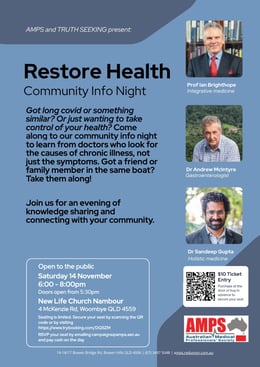
Professor Ian's Bio
Professor Brighthope graduated in Agricultural Science in 1965 and in Medicine and Surgery in 1974. In the 1970s he set up the Brighthope Clinics and Biocentres, specialising in nutritional and environmental medicine, intravenous therapies (including chelation) and herbal medicine.
He was founding president of the Australasian College of Nutritional and Environmental Medicine (ACNEM) for over 26 years, and created Australia's first postgraduate medical course in nutrition. He is now ACNEM's official ambassador.
He has advocated for doctors practising integrative medicine for over 35 years. From 2001 to 2003 he was President of the Complementary Healthcare Council of Australia, and in 2002 he gave the National Press Club address on complementary medicines and healthy ageing. He is the official ambassador to Complementary Medicines Australia.
Professor Ian Brighthope
Dip.Ag.Sci., MBBS, FACNEM
Appearing virtually
His talk
Take Back Your Health: Nourish Your Body, Reclaim Your Future
“My training in agricultural science, nutritional and environmental medicine has taught me that health depends on the conditions in which life grows. Just as healthy crops need nourishing soil, clean water and a suitable environment, we need nutritious food, restorative sleep, clean air, movement suited to our capacity, and meaningful human connection. Longevity begins with these daily foundations. By nourishing ourselves well, maintaining muscle and reducing harmful exposures, we can improve our chances of remaining active and independent as we age. Self-help begins with small, achievable changes, supported by thoughtful medical care.”
“For people living with long COVID or persistent symptoms following vaccination, my message is one of compassion, careful assessment and realistic hope. Their suffering deserves to be heard and investigated. Good nutrition, correction of deficiencies, sleep support and individually tailored symptom management can contribute to care. Where exertion causes a delayed worsening of symptoms, pacing is essential; pushing through may make matters worse. We must investigate possible vaccine reactions carefully, and treat the conditions identified. Above all, people deserve practical support and clinicians willing to listen and stay alongside them. These will be discussed and questions answered.”
Dr Andrew's Bio
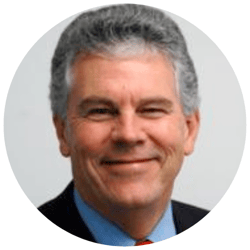
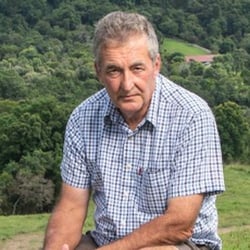
Dr Andrew McIntyre is a highly experienced Consultant Gastroenterologist and Hepatologist with more than three decades of clinical practice on the Sunshine Coast.
He established the Buderim Gastroenterology Centre, where he leads a busy endoscopy day surgery service, delivering care across a broad range of gastrointestinal and liver conditions.
Dr McIntyre has extensive expertise in all areas of gastroenterology, with a particular focus on ERCP and advanced therapeutic endoscopic procedures.
His career has also been shaped by recent health policy decisions that impacted his ability to practise within hospital settings, giving him a unique perspective on the intersection between clinical care, workforce access, and system-level decision-making.
Dr McIntyre brings deep clinical insight and a strong commitment to patient-centred care, alongside a willingness to engage in difficult but necessary conversations about the future of healthcare in Australia.
Dr Andrew McIntyre
Gastroenterologist and Hepatologist | MBBS, FRACP
Appearing in person
His talk
Dr Andrew McIntyre examines the growing burden of chronic disease through the lens of metabolic health, nutrition, and modern dietary advice.
Drawing on decades of clinical experience in gastroenterology, Dr McIntyre explores the role of insulin resistance as a central driver of many common conditions, including type 2 diabetes, obesity, cardiovascular disease, fatty liver disease, and even cognitive decline.
The presentation challenges long-held assumptions about dietary guidelines, asking whether current approaches to nutrition have contributed to worsening health outcomes despite widespread compliance.
Key topics include:
- The physiology of insulin resistance and its clinical consequences
- The relationship between modern diets, refined carbohydrates, and metabolic disease
- Evidence surrounding low-carbohydrate and ketogenic dietary approaches
- The rise of non-alcoholic fatty liver disease and its links to metabolic dysfunction
- Ongoing debates around dietary guidelines, food systems, and public health policy
Dr McIntyre also explores how broader influences, including industry, policy, and emerging global trends are shaping dietary recommendations and public health messaging.
This session offers a clinical and systems-level perspective on one of the most pressing questions in healthcare today:
Are we addressing the root causes of chronic disease or managing the consequences?
Dr Sandeep's Bio
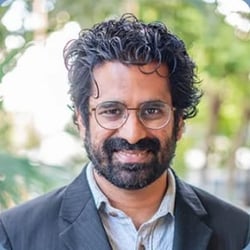
Dr Gupta is a GP who runs an integrative medicine clinic on the Sunshine Coast. He graduated from the University of Queensland in 1999 and worked in hospitals for ten years before his own illness led him to a more holistic model of care.
He started with diet and nutrition, then moved into environmentally related illness, including mould-related illness, tick-borne disease and heavy metal toxicity. He has treated over 10,000 patients with environmental illness and teaches other practitioners how to add this to their toolkit.
Dr Sandeep Gupta
Holistic and integrative medicine | MBBS, MA, FRACGP, FACNEM
Appearing in person
His talk
TBC
Dr Sandeep Gupta, integrative GP, who has treated over 10,000 patients with environmental illness (mould, tick-borne disease, heavy metals).
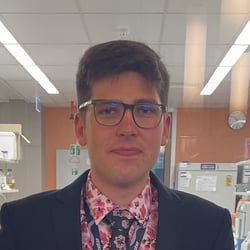
Max's Bio
Max Joseph Thompson is a PhD candidate at the Mater Research Institute-University of Queensland, based at the Translational Research Institute in Brisbane. Working under Professor Kum Kum Khanna, his research focuses on repurposing existing medicines to develop affordable, accessible treatments for aggressive breast and ovarian cancers.
Max holds a High First Class Honours in Cancer DNA Damage Research and currently serves as Chair of the One Translational Research Institute Student Committee, representing and supporting more than 300 research students. His work bridges cancer biology, drug repurposing and translational medicine, with a particular emphasis on overcoming treatment resistance and improving long-term patient outcomes.
Max Thompson
PhD Candidate, Mater Research Institute, The University of Queensland | B.Adv.Sc. (Hons I)
Max Thompson will be unable to present due to unforeseen health issues. A brief overview of his work will be discussed on the night.
His talk
Repurposing Antiparasitic Medicines to Target Aggressive Breast and Ovarian Cancers
Triple-negative breast cancer (TNBC) and high-grade serous ovarian cancer (HGSOC) are aggressive cancers that frequently develop treatment resistance and return after therapy.
My research initially screened three antiparasitic medicines, fenbendazole, albendazole and mebendazole, across several cancer models. Albendazole emerged as the leading candidate for combination with ivermectin, demonstrating promising anticancer activity and potential for future clinical translation.
Together, these medicines appear to disrupt cancer cell survival, interfere with mechanisms driving treatment resistance and trigger immunogenic cell death, potentially helping the immune system recognise and attack cancer cells.
A key focus is epigenetics: the biological switches controlling which genes are turned on or off. Our preliminary findings suggest this combination may influence gene regulation, potentially limiting cancer cells' ability to adapt, resist treatment and survive. We are also investigating its effects on cancer stem-like cells, which are associated with treatment resistance and recurrence.
Importantly, we have observed evidence of pyroptotic cell death, a process that may stimulate immune responses against cancer.
Through molecular profiling and preclinical studies, we aim to understand these mechanisms and identify patients most likely to benefit.
Ultimately, our goal is to repurpose affordable, existing medicines to strengthen conventional cancer treatments, overcome resistance and reduce recurrence.
HOSTED BY

With support from


Donate
The Australian Medical Professionals' Society is accepting donations. Money raised will be receipted to Red Union Support Hub and used to help assist AMPS in running campaigns and raising awareness of the need for doctors to be unshackled by AHPRA and censorious bureaucrats.